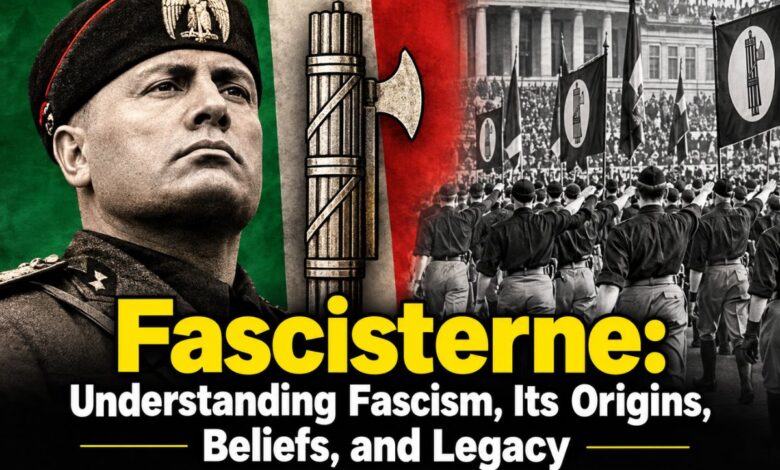
The term fascisterne refers to people who support or identify with fascism, an authoritarian and far-right political ideology associated historically with strong nationalism, centralized power, political repression, and the rejection of liberal democracy. The word is Danish, with “fascisterne” meaning “the fascists” in the definite plural form.
Fascism first became a major political movement in Italy during the early 20th century under Benito Mussolini. From there, fascist ideas influenced political movements in other countries, most notably Nazi Germany under Adolf Hitler. Although fascist movements have differed from one country to another, they have commonly emphasized national unity, obedience to authority, powerful leadership, and hostility toward political opponents.
Understanding who the fascisterne were, what they believed, and how fascist governments operated is important for understanding modern European history and the dangers of authoritarian politics.
What Does Fascisterne Mean?
The Danish word fascisterne translates directly into English as “the fascists.” It describes followers or supporters of fascism.
Fascism is difficult to define through a single political principle because historical fascist movements combined several ideas. These included extreme nationalism, authoritarian government, mass political mobilization, rejection of liberal democratic institutions, glorification of political leadership, and a willingness to use violence or repression against opponents.
The concept developed particularly strongly after the First World War, when economic instability, political conflict, social unrest, and fears of revolution created conditions in which authoritarian movements could gain support.
The Origins of Fascism
Fascism in Italy
Modern fascism emerged in Italy after the First World War. Benito Mussolini played the central role in transforming fascism from a political movement into a governing system.
Mussolini established the Fasci Italiani di Combattimento in 1919. The movement later developed into the National Fascist Party. In 1922, Mussolini and his supporters gained political power following the March on Rome.
Once in government, Mussolini gradually dismantled democratic institutions and established a dictatorship.
The Meaning of the Fasces
The word fascism is connected to the Latin word fasces, referring to a bundle of rods traditionally carried by officials in ancient Rome. The symbol represented authority and collective strength.
Fascist movements adopted imagery from ancient Rome to connect their political vision with ideas of national power, discipline, unity, and historical greatness.
Core Beliefs Associated With Fascisterne
1. An Authoritarian or Totalitarian State
One of the most important characteristics of fascism is the belief that the state should possess extensive authority over political and social life.
Fascist governments sought to reduce or eliminate independent political opposition. Institutions such as opposition parties, free political organizations, and independent media could be restricted or suppressed.
The individual was expected to place the interests of the nation and state above personal political interests.
The State Above the Individual
Fascist ideology generally rejected the idea that individual rights should place strong limits on government authority. Instead, fascists emphasized collective identity, discipline, and national purpose.
This vision could result in extensive government control over education, political organizations, cultural activities, and public communication.
2. Extreme Nationalism
Nationalism was at the center of fascist political thinking.
Fascists viewed the nation as a unified community whose interests should take priority over individual or class interests. They promoted national pride and often argued that society needed to overcome internal divisions in pursuit of national strength.
In practice, extreme nationalism could also create hostility toward people portrayed as outsiders or enemies of the national community.
3. Strong Leadership
Fascist movements commonly organized political authority around a powerful leader.
Mussolini became known as Il Duce, meaning “The Leader.” His political image was carefully promoted as a symbol of strength, authority, and national direction.
The leader was presented as someone capable of overcoming political division and restoring national greatness.
4. Militarism and the Glorification of War
Fascist movements frequently celebrated military discipline, physical strength, sacrifice, and warfare.
War could be presented not simply as a political necessity but as an expression of national strength and collective purpose. Fascist governments therefore invested heavily in military development and expansionist policies.
This militaristic worldview contributed to aggressive foreign policies and helped create conditions that eventually contributed to the Second World War.
Fascisterne and Democracy
Fascism was fundamentally hostile to liberal democracy.
Democratic systems are based on principles such as political competition, elections, individual rights, pluralism, and institutional checks on government power. Fascist ideology generally regarded these principles as signs of weakness, division, or disorder.
Fascists instead promoted political unity under centralized leadership.
Suppression of Political Opposition
After obtaining power, fascist governments frequently targeted political opponents.
Opposition parties and organizations could be banned or restricted, while political activists, journalists, trade unionists, and other critics could face intimidation, imprisonment, or other forms of repression.
The suppression of opposition allowed fascist governments to maintain political control while presenting the appearance of national unity.
Fascism and Socialism
Although fascism and socialism both emerged as influential political forces during the turbulent early 20th century, fascism was strongly opposed to Marxism and communist movements.
Fascists rejected the idea of international class struggle and instead emphasized national unity.
In countries where fascist movements gained power, communist and socialist organizations were often treated as political enemies. Trade unions and other independent organizations could also be brought under government control or replaced with state-directed structures.
Fascisterne and Propaganda
Propaganda was an important instrument of fascist political control.
Fascist governments used newspapers, radio, posters, public ceremonies, education, speeches, films, and mass rallies to promote their political messages.
Creating a Political Image
Propaganda often presented the leader as strong, decisive, and capable of protecting the nation.
It also portrayed the political movement as a unified national community while depicting opponents as dangerous enemies.
The purpose was not simply to communicate information. Propaganda could shape public opinion, strengthen loyalty, and discourage criticism.
Fascism Beyond Italy
Although fascism originated in Italy, similar authoritarian movements developed elsewhere.
The most infamous example was Nazi Germany, where Adolf Hitler and the National Socialist German Workers’ Party established a dictatorship.
Nazi ideology shared several characteristics with fascism, including authoritarian leadership, aggressive nationalism, militarism, political repression, and the rejection of liberal democracy. However, Nazism also placed an exceptionally central emphasis on racial ideology and antisemitism.
Other European countries also experienced fascist or fascist-influenced movements during the interwar period.
The Role of Fascism in the Second World War
Fascist expansionism was a major factor in the political tensions that preceded the Second World War.
Mussolini’s Italy pursued territorial expansion, while Nazi Germany adopted an aggressive program of military expansion and conquest.
The war resulted in enormous destruction and loss of life. The defeat of the Axis powers in 1945 led to the collapse of the major fascist regimes in Europe.
The historical experience of fascism subsequently influenced the development of international human rights principles and democratic institutions.
Why Fascism Still Matters Today
Lessons From History
The history of the fascisterne provides important lessons about political power and democratic institutions.
Fascism demonstrates how political movements can exploit economic uncertainty, social division, fear, and public frustration to gain influence.
It also illustrates how democratic institutions can be weakened gradually when political leaders undermine independent institutions, attack opponents, restrict free expression, and concentrate power.
Recognizing Authoritarian Tendencies
Studying fascism does not mean labeling every authoritarian or nationalist political movement as fascist. The term has a specific historical and political meaning.
A careful analysis should consider multiple characteristics, including attitudes toward democracy, political pluralism, nationalism, leadership, violence, state power, and individual rights.
This distinction is especially important because “fascist” is sometimes used casually as an insult rather than as a meaningful political description.
Fascisterne: Historical Significance
The fascisterne occupy an important place in modern European history because their movements demonstrated how authoritarian politics could become deeply integrated into government institutions and everyday life.
Their history shows the consequences of concentrating political power around one leader, suppressing opposition, manipulating public information, promoting aggressive nationalism, and weakening democratic checks and balances.
The study of fascism therefore extends beyond the history of Italy or Germany. It provides a broader framework for understanding authoritarianism, political extremism, propaganda, and the importance of democratic institutions.
Conclusion
The term fascisterne refers to the followers of fascism, a political ideology that emerged prominently in Italy during the early 20th century. Fascist movements emphasized authoritarian leadership, extreme nationalism, centralized state power, militarism, political unity, and opposition to liberal democracy and socialism.
Under Mussolini, fascism became a governing system that influenced political developments across Europe. Its historical legacy is closely connected with dictatorship, repression, aggressive nationalism, militarism, and the catastrophic conflicts of the 20th century.
Understanding the fascisterne and the ideology they represented is essential for studying modern history. It also helps explain why democratic institutions, political freedoms, independent journalism, and respect for individual rights remain important safeguards against authoritarian rule.
Quick Info About Fascisterne
| Topic | Information |
|---|---|
| Meaning | The Danish term for “the fascists” |
| Ideology | Fascism |
| Political Character | Authoritarian and far-right |
| Major Origin | Italy |
| Key Historical Leader | Benito Mussolini |
| Major Period | Early to mid-20th century |
| Core Ideas | Nationalism, authoritarianism, militarism, strong leadership |
| Attitude Toward Democracy | Strongly opposed to liberal democracy |
| Historical Legacy | Dictatorship, repression, militarism, and political extremism |
FAQs About Fascisterne
What does fascisterne mean?
Fascisterne is a Danish word meaning “the fascists.” It refers to people who support or belong to fascist political movements.
Where did fascism originate?
Modern fascism emerged in Italy after the First World War. Benito Mussolini became its most important early political leader.
What did the fascisterne believe?
Fascist movements generally emphasized extreme nationalism, centralized authority, strong leadership, political unity, militarism, and opposition to liberal democracy and communism.
Were fascists opposed to democracy?
Yes. Historical fascist movements generally rejected liberal democracy and political pluralism, preferring centralized authority under a powerful leader.
Why was Benito Mussolini important to fascism?
Mussolini was the central figure in the development of Italian fascism. He transformed the movement into a governing political system after becoming Italy’s leader in the 1920s.
Is fascism the same as Nazism?
Nazism shared several characteristics with fascism, including authoritarian leadership, extreme nationalism, militarism, and rejection of liberal democracy. However, Nazi ideology placed an especially central role on racial hierarchy and antisemitism.
Why is studying fascism important?
Studying fascism helps people understand authoritarian political systems, propaganda, political repression, extreme nationalism, and the historical importance of democratic institutions and individual rights.